Module 3: Whole Number Operations
EDUC 315 - Howard University
Concrete-Representational-Abstract (CRA)
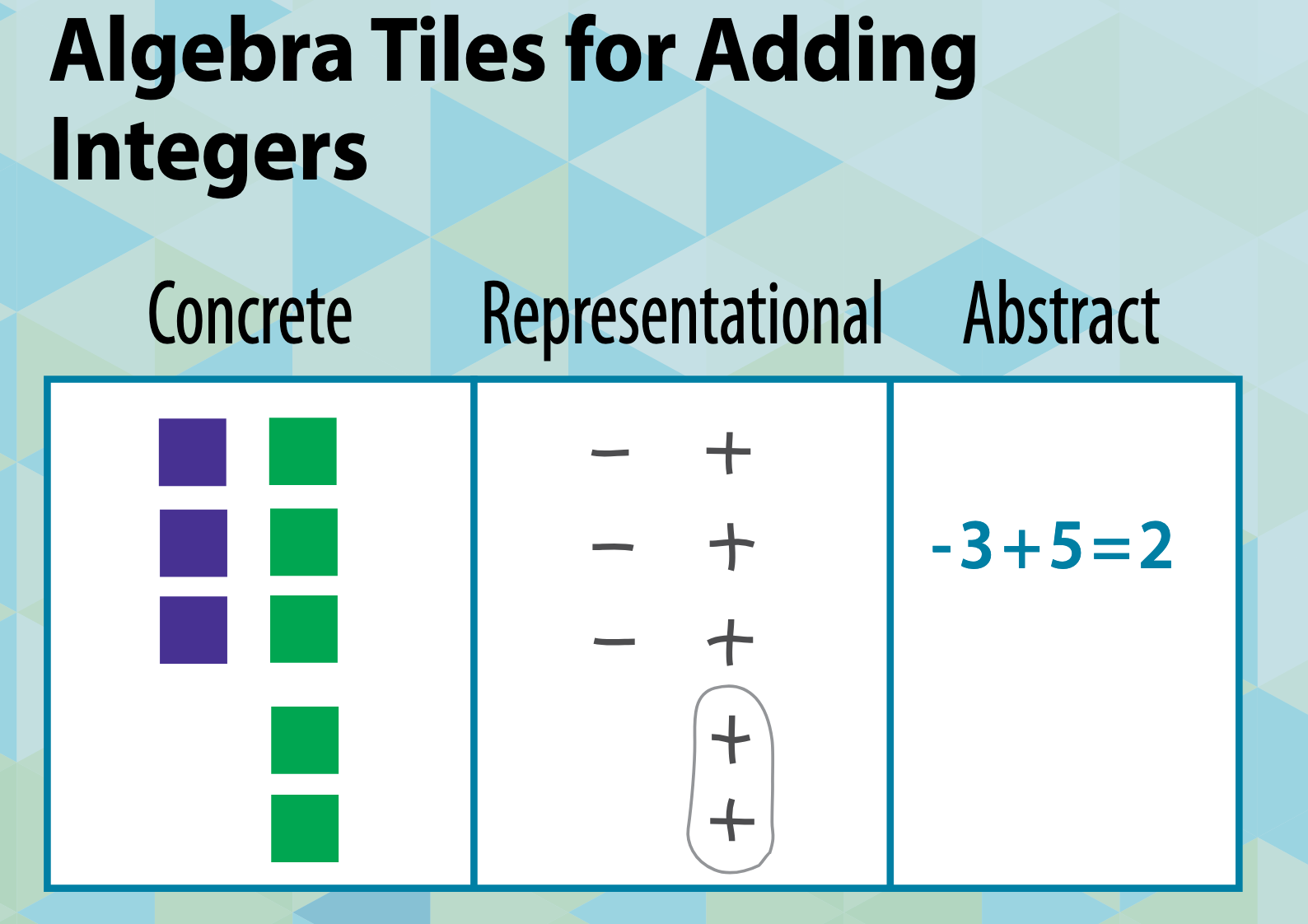
The Concrete-Representational-Abstract (CRA) process is an instructional approach in mathematics that helps students develop a deeper understanding of mathematical concepts by progressing through three stages:
- Concrete Stage:
- Students use physical, hands-on objects to model mathematical concepts
- Examples include base-10 blocks, counters, fraction bars, or algebra tiles
- This stage allows students to manipulate tangible objects to solve problems
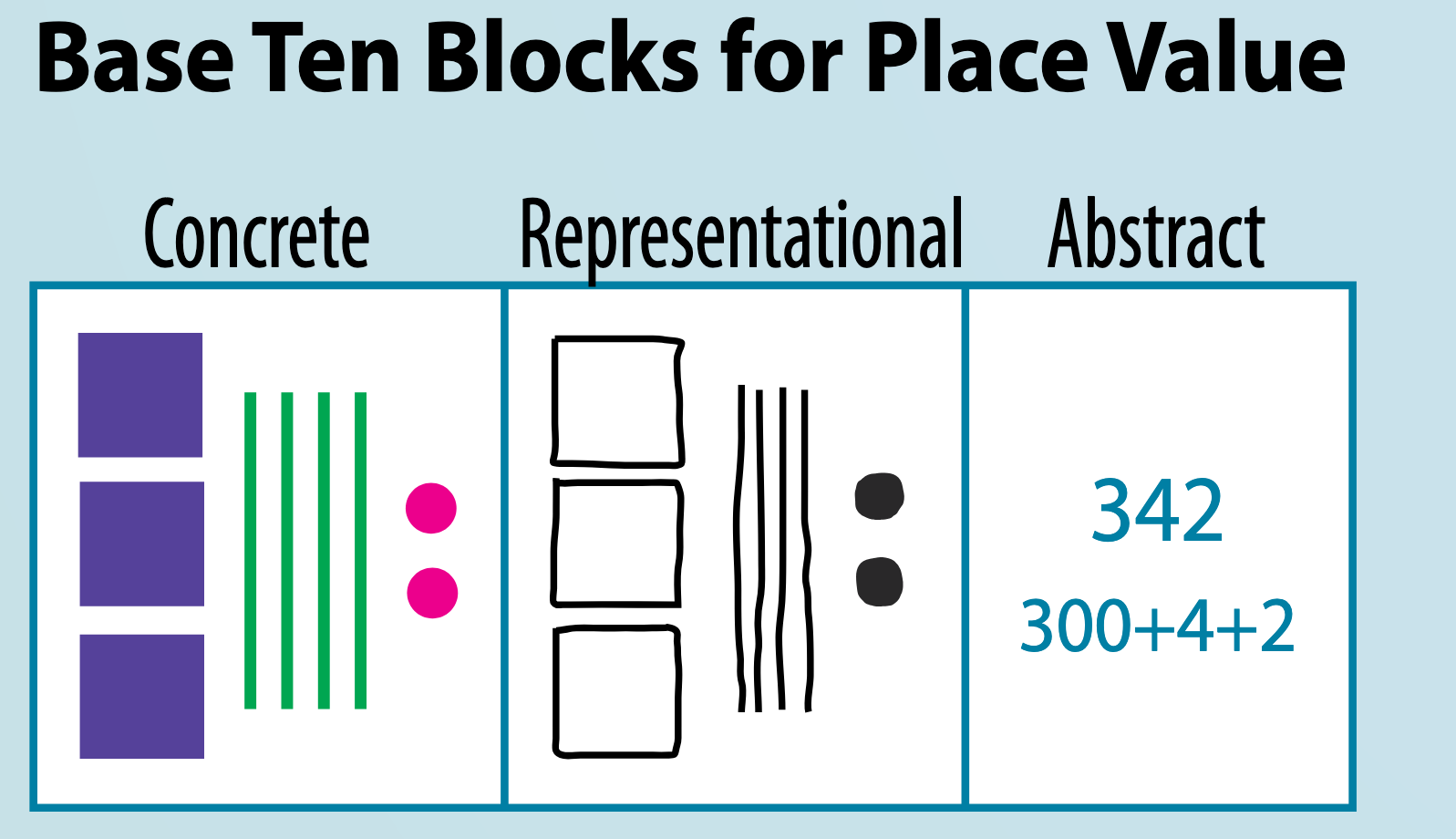
- Representational (or Pictorial) Stage:
- Students transition to using visual representations of the concrete objects
- This may involve drawings, diagrams, or other pictorial models
- Examples include number lines, bar models, or sketches of manipulatives
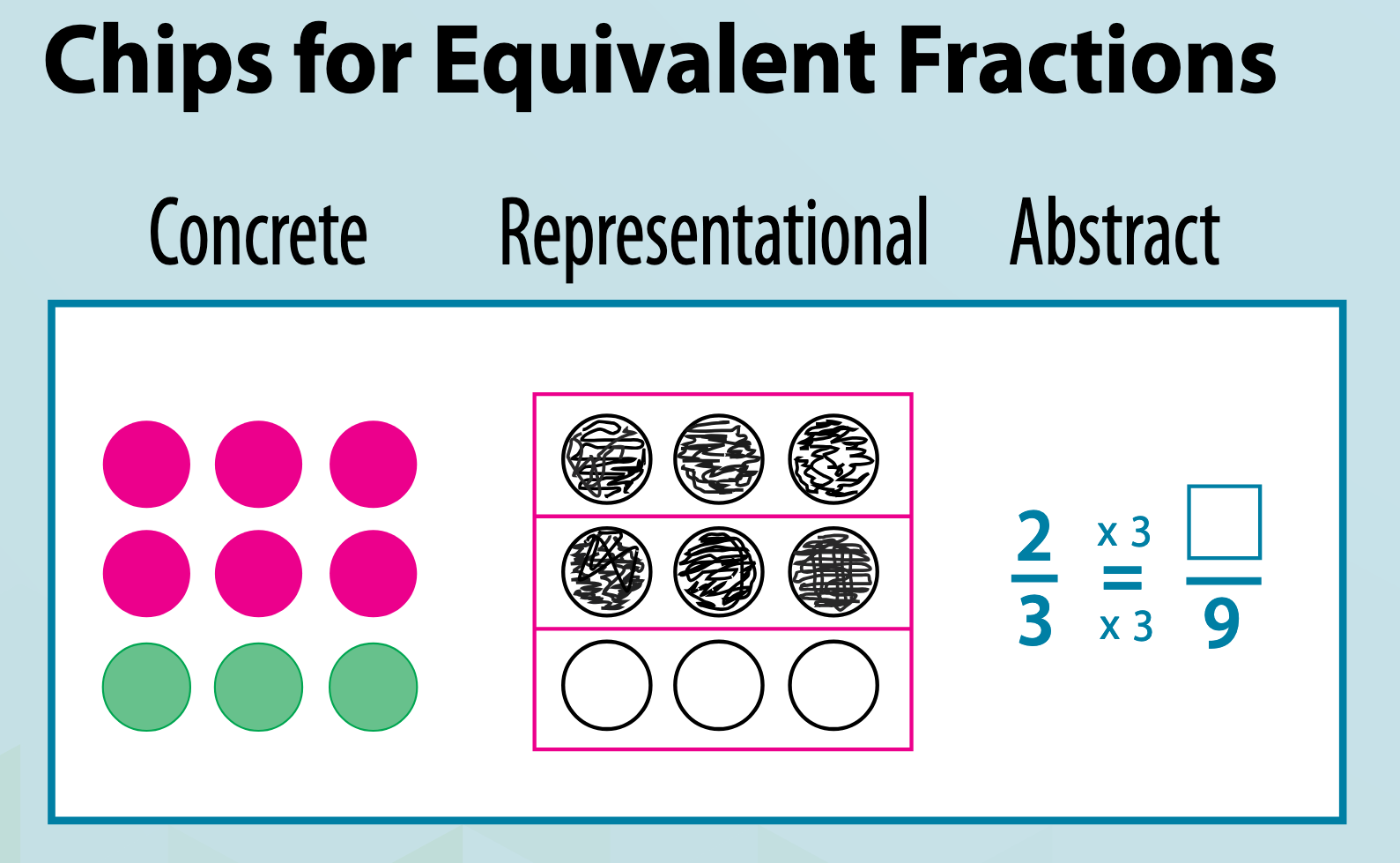
- Abstract Stage:
- Students work with abstract symbols and notation
- This includes numbers, variables, and mathematical symbols (+, -, x, ÷)
- Students apply their understanding to solve problems using standard algorithms
The CRA approach deepens mathematical understanding and help students internalize abstract concepts by first grounding them in concrete experiences.
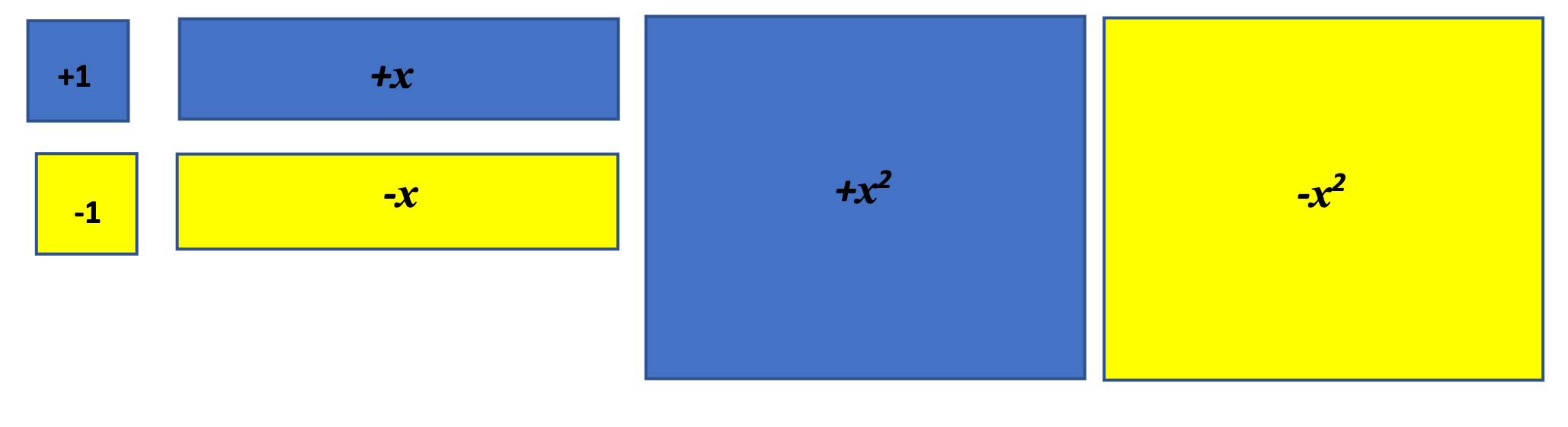
Algebra tiles
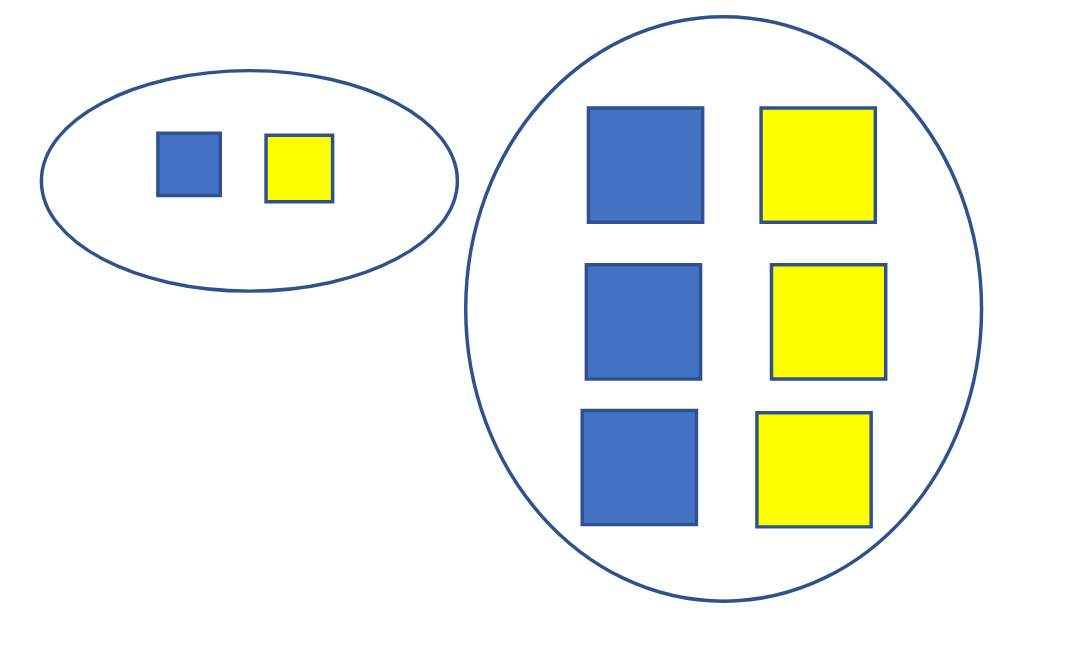
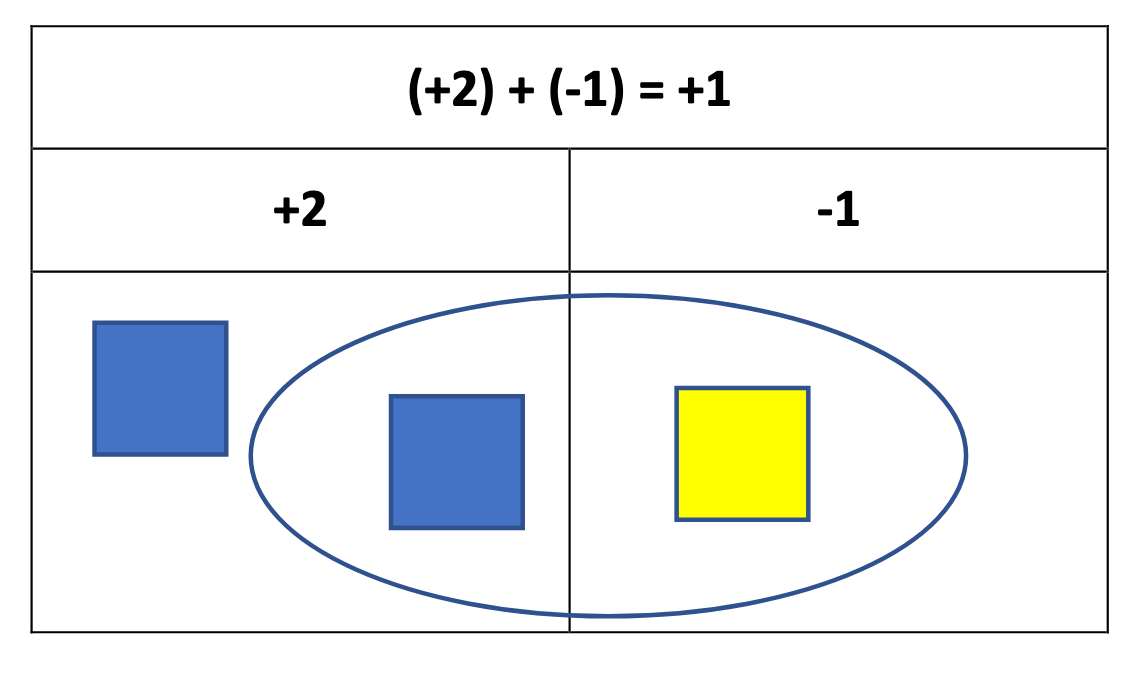
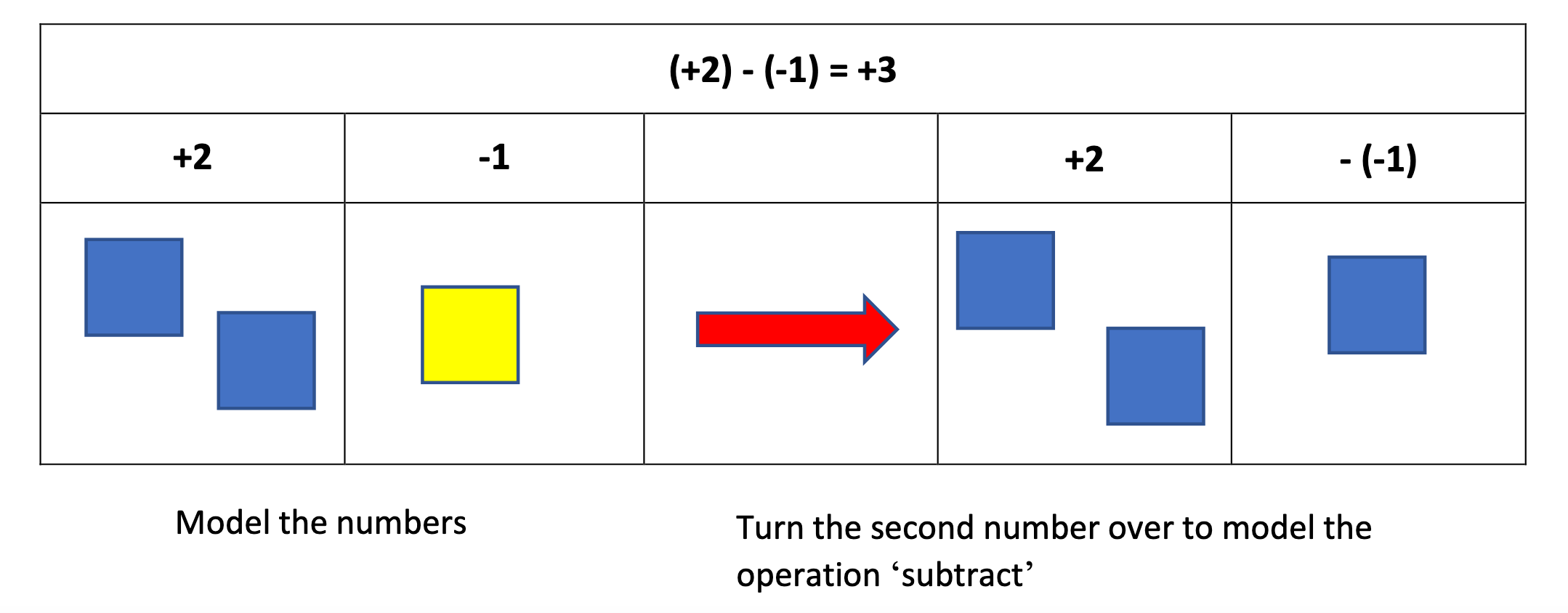
Depending on the grade of instruction, algebra tiles can be used as a concrete way to express various operations, such as the sum and difference.
Product and Quotient
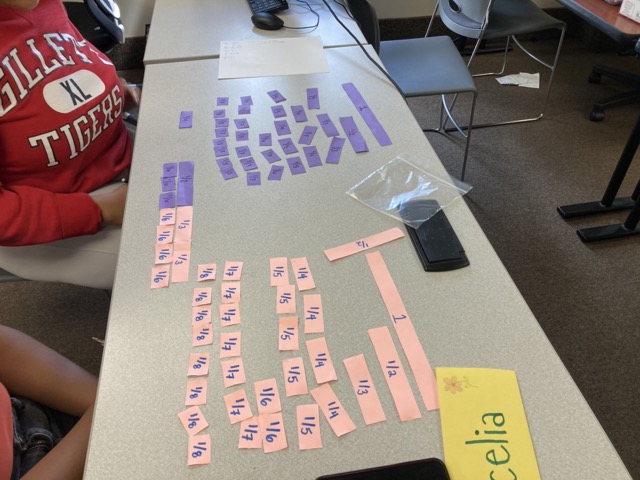
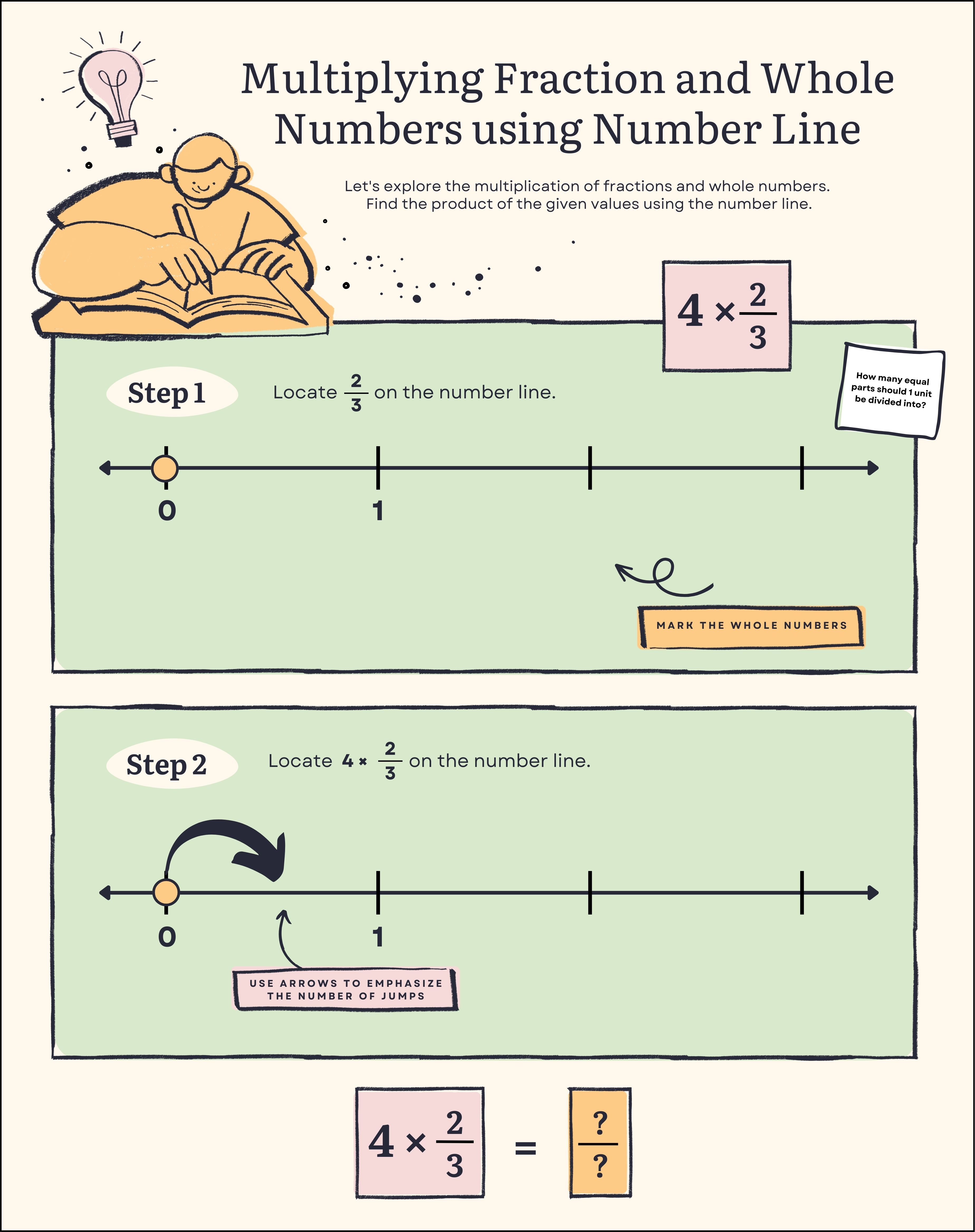
Fraction tiles provide a great way to review and extend students’ understanding of the concepts of multiplication and division.
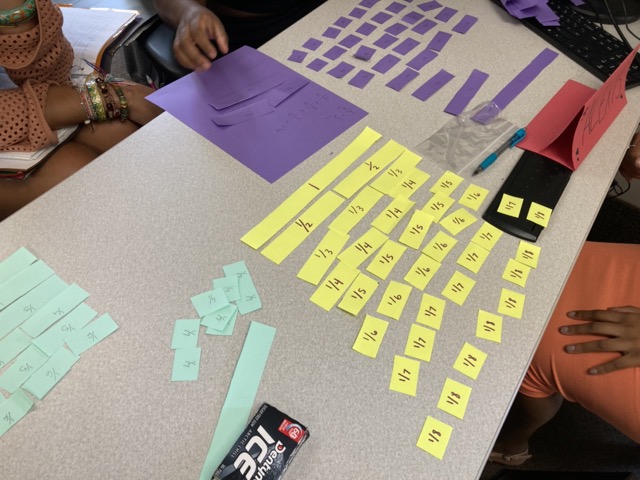
Assessing multiple skills
Multiplication (product) with fractions (quotients)
Teaching Exponents
Pattern Blocks
Pattern blocks can be used to visually demonstrate exponents. For example:
- Use one triangle to represent \(1 \times 1\)
- Four triangles together represent \(2 \times 2\)
- Nine triangles together represent \(3 \times 3\)
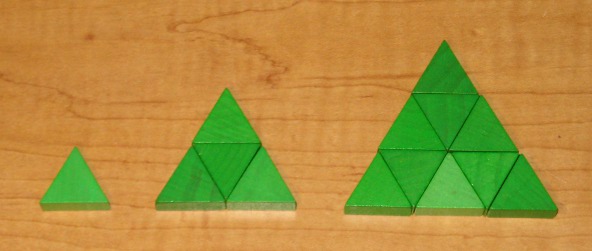
Draw the pattern for \(4 \times 4\) and \(5 \times 5\).
These patterns helps students visualize the quantity of exponents but we want to also show them representations of exponents as repeated multiplication; we can use base-ten blocks to extend their understanding.
Base Ten Blocks
Base ten blocks work well for teaching powers of 10:
- A unit cube represents \(10^0 = (1)\)
- A rod represents \(10^1 = 10 = (10)\)
- A flat represents \(10^2 = 10 x 10 = (100)\)
- A large cube represents \(10^3 = 10 x 10 x 10 = (1000)\)
Grid Paper
Grid paper allows students to draw squares and rectangles to represent exponents:
- A \(2 x 2\) square represents \(2^2\)
- A \(3 x 3\) square represents \(3^2\)
- A \(2 x 2 x 2\) cube represents \(2^3\)

Draw the figures representing \(3^3\) and \(4^2\).
Teaching Roots
Algebra Tiles
Algebra tiles are also good for teaching square roots:
- Use the square tiles to build perfect square numbers (1, 4, 9, 16, etc.)
- The side length of the square represents the square root
For example, a \(3x3\) square of tiles has an area of \(9\), so the square root of \(9\) is \(3\).
Grid Paper
Grid paper can be used to estimate non-perfect square roots:
- Draw a square with the given area (e.g. 17)
- Count the side length to estimate the square root
- Refine by adding partial squares
This provides a visual model for estimating irrational square roots.
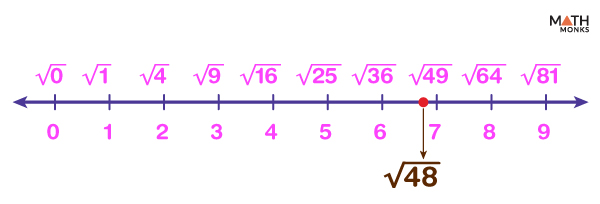
Number Lines
Use a number line to place square roots between perfect squares:
- Mark perfect squares (1, 4, 9, 16, 25, etc.)
- Estimate locations of other square roots between them
This helps students understand square roots as numbers between integers.
We can use manipulatives to build conceptual understanding before moving to procedures. Allow students to explore and discover patterns through hands-on activities. Gradually connect the concrete models to symbolic notation as students gain understanding.
Ancestral mathematics
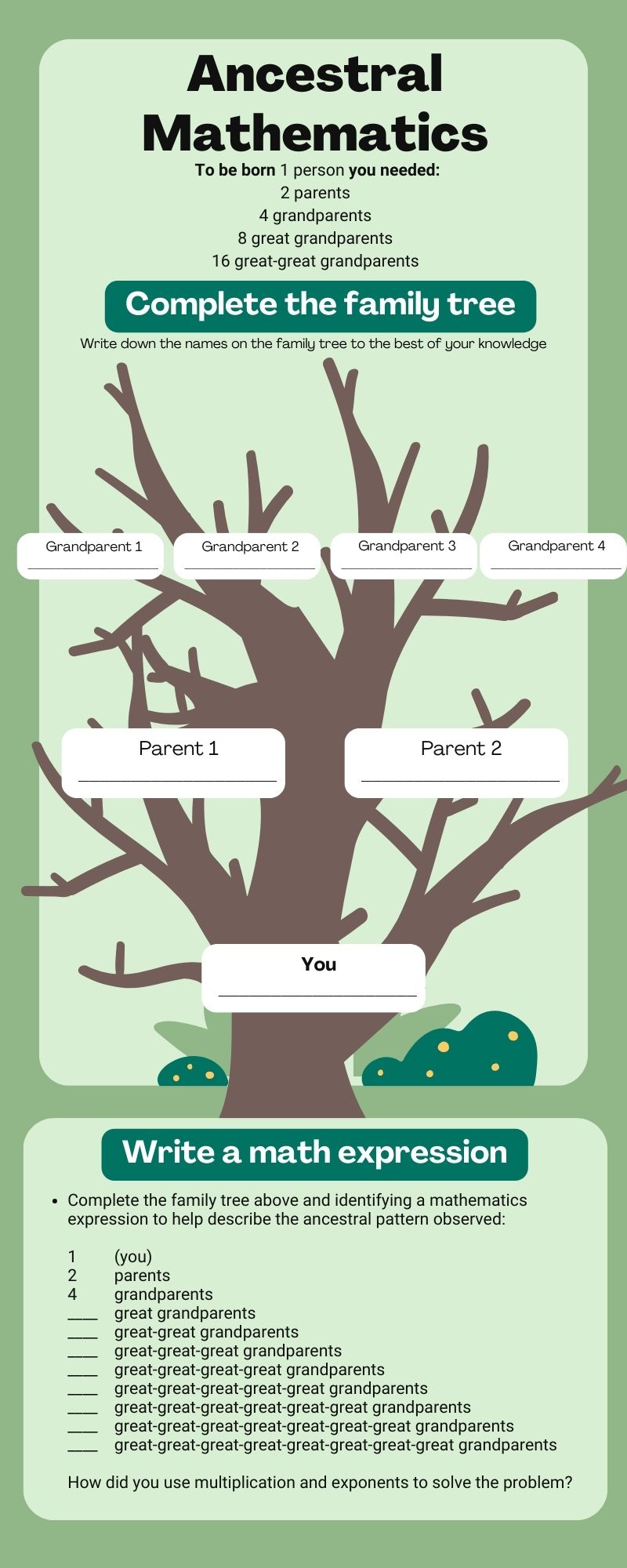
Ancestral mathematics activity by Dr. Nathan Alexander. Adapted from ‘Ancestral Mathematics’ meme.
Using the image above as a sample, outline an Ancestral Mathematics class activity and create or modify the worksheet to follow along with your activity.
Historical STEM Figures
This module closes with the identification of a historical figure in STEM.
Objective
Research a historical STEM figure and create engaging content to showcase their contributions. The historical figure should showcase the growing diversity of a host of identities, cultures, and backgrounds represented in STEM.
Procedures
Museum visit (75 minutes): Smithsonian Museum exhibit. Please take notes on interesting STEM figures and exhibits.
Figure selection and background research: Choose a historical STEM figure based on museum inspiration. Conduct additional research using archival resources and online databases.
Content creation: Students create content about their chosen figure in one of the following formats: Detailed video presentation (e.g., Tiktoc), Visual infographic (e.g., Canva), Interactive digital timeline, Podcast-like episode, Digital exhibit
Peer review: Students your work with classmates for feedback. Make final adjustments based on peer feedback.
Presentation (5 minutes): Develop a 5-minute presentation in the style that you would present it to your student. Present finished content to the class as if you were in front of your future students.

Image from rif.org
